-
 Marcus Gheeraerts II (1561 - 1635)An unknown English noblewoman, possibly a member of the Strode family, Painted circa 1615Oil on panel39 ½ x 34 3⁄8 in. (100.4 x 87.5 cm.)
 -
Unknown Follower of Custodis (fl. 1592 – 1612)Sir Reginald (c.1564 - 1639) and Lady Dorothy Mohun of Hall and Boconnoc, Cornwall, Painted circa 1604Oil on panel75 x 44 in. (190.5 x 111.4 cm.)
-
Studio of William Larkin (c.1585 – 1619)Sir James Hay (1580 – 1636), later 1st Earl of Carlisle, Painted circa 1618 - 1619Oil on canvas86 ¾ x 51 ⅜ in. (220.5 x 130.5 cm.)
-
Robert Peake (c.1551 – 1619)An unknown noble boy, possibly a member of the Harlakenden family, Painted circa 1605Oil on panel51¾ x 41½ in. (131.5 x 105.5 cm.)
-
Attributed to William Peake (c. 1580 – 1639)Three children, possibly James (1607 – 1651), later 7th Earl of Derby; Robert (d. 1632) and Anne Stanley, later Countess of Ancram (d. 1657)Oil on canvas48 ¾ x 50 in. (124 x 127 cm.)
-
Cornelius Johnson (1593 – 1661)Dudley North, 4th Baron North (1602 – 1677), Painted 1627Oil on panel30 ¾ x 24 ½ in. (78.2 x 62.3 cm.)
-
Cornelius Johnson (1593 – 1661)An unknown noblewomanOil on panel30 ½ x 24 in. (77.5 x 61 cm.)
-
Theodore Russel (1614 – 1689) after Sir Anthony van Dyck (1599 – 1641)Margaret Smith, Mrs Thomas Carey, later Lady Herbert (1606 – 1678), Painted circa 1650sOil on panel15 ¼ x 11 ¾ in. (39 x 30 cm.)
-
Remigius van Leemput (c.1609 - 1675) after Sir Anthony van Dyck (1599 – 1641)Anne Cecil, wife of the 10th Earl of Northumberland , Painted circa 1650sOil on panel15 ¼ x 11 ¾ in. (39 x 30 cm.)
-
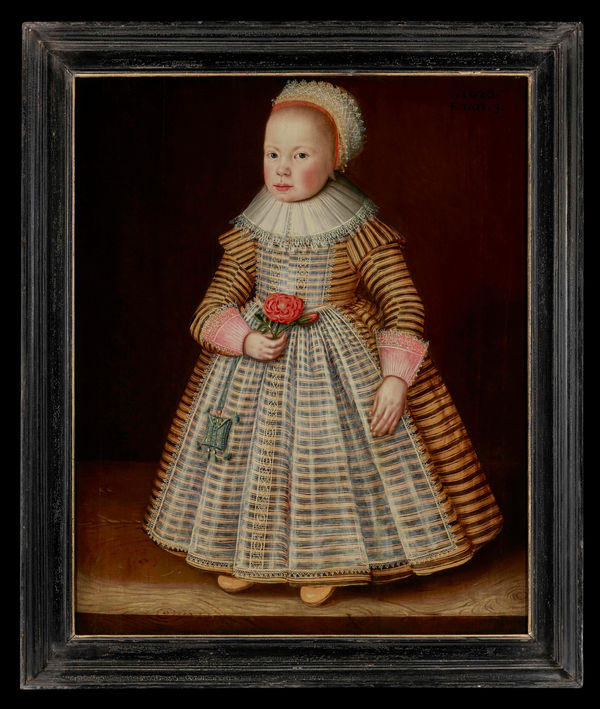
Master of the Shafto Portraits (fl. 1620 – 1630)A 3-year-old girl from the Shafto familyOil on panel32 3/8 x 26 in. (82.3 x 66.1 cm.)
-
Mary Beale (1633 – 1699)Lady Mary Sadleir, née Lorymer (d. 1706) [?]Oil on canvas30 x 25 in. (76.2 x 63.5 cm.)
-
Jan Siberechts (1627–1703)A pastoral landscape, with a distant view of Hambleden [?]Oil on canvas55 x 49 ½ in. (139.7 x 126 cm.)
-
James Carrudus (fl. c.1665 - c.1685)William Douglas (1637 – 1695), 3rd Earl of Queensberry, Painted circa 1675 - 1683Oil on canvas48 ¾ x 39 in. (124 x 99 cm.)
-
Frans Pourbus the Younger (1569 – 1622)Henri IV of France (1553 – 1610)Oil on canvas23⅛ x 17⅛ in. (58.7 x 43.5 cm.)
-
Nicolas de Largillierre (1656 - 1746)Élisabeth-Charlotte d'Orléans, Mademoiselle de Chartres, Painted circa 1680sOil on canvas25 ¾ x 21 in. (65.5 x 53.5 cm.)
-
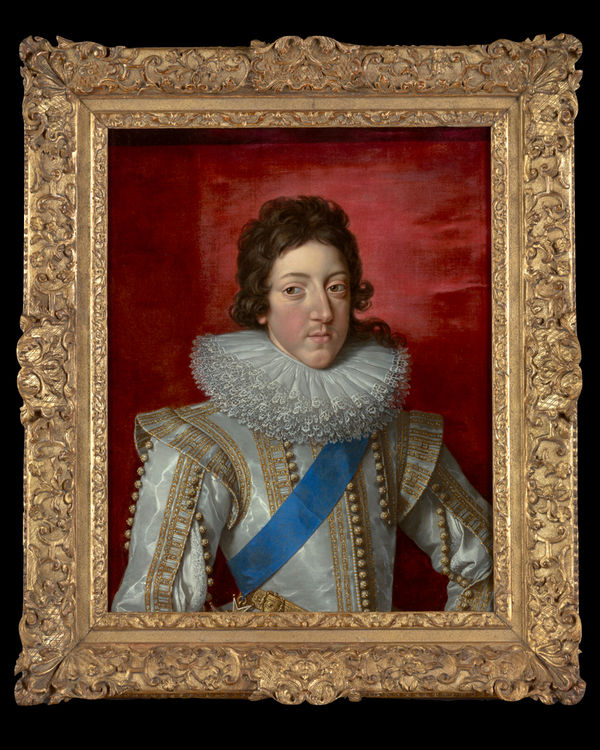
Frans Pourbus the Younger (1569 – 1622)Louis XIII of France (1601 – 1643), Painted circa 1620 – 1621Oil on de-lined canvas27 × 21 ½ in. (68.5 × 54.5 cm.)
-
French SchoolAn unknown boy wearing Polish costume, possibly a portrait historié, circa 1650 - 1675Oil on paper, laid on an oval panel5 5/8 x 4 3/8 in. (14.4 x 11 cm.)
-
Friesland School, 1603A three-year-old boy holding a kolf club and ballOil on panel41½ x 31 in. (107.3 x 78.7 cm.)
-
Nicolaes Eliasz. Pickenoy (c.1588 – c.1650)Dirck Jansz. Sweelinck (1591 – 1652), organist of the Oude KerkOil on panel25 ½ x 19 15/16 in. (64.8 x 50.6 cm.)
-
Pieter van Anraedt (c.1635 – 1678)An unknown magistrate, possibly a Regent of Deventer , Probably painted in Deventer, circa late 1660sOil on canvas39 3/8 x 21 ½ in. (100 x 80 cm.)
-
Abraham Janssens II (1616 – 1649)Allegory of Summer, Painted circa 1640Oil on panel47 ¾ x 36in. (121.3 x 91.5cm.)


![Mary Beale (1633 – 1699), Lady Mary Sadleir, née Lorymer (d. 1706) [?]](https://static-assets.artlogic.net/w_600,c_limit,f_auto,fl_lossy,q_auto/artlogicstorage/weissgallery/images/view/171f9074da7d878176d56ab917e2e8faj/theweissgallery-mary-beale-1633-1699-lady-mary-sadleir-n-e-lorymer-d.-1706.jpg)
![Jan Siberechts (1627–1703), A pastoral landscape, with a distant view of Hambleden [?]](https://static-assets.artlogic.net/w_600,c_limit,f_auto,fl_lossy,q_auto/artlogicstorage/weissgallery/images/view/69e3f03965da4e03483677ba3e6603ccj/theweissgallery-jan-siberechts-1627-1703-a-pastoral-landscape-with-a-distant-view-of-hambleden.jpg)




ABOUT 17TH CENTURY PORTRAITURE
The beginning of the seventeenth century was disctinctly marked with a changing of monarchal style from the death of Elizabeth I and the coronation of James VI & I in 1603. Not only did it present the beginning of a new royal dynasty but it also introduced a new form of intellectualised culture in the royal court. Portraitists such as Robert Peake, John de Critz and Marcus Gheeraerts carried forth the stylised mannering of their sitters that had been fashionable in the late Elizabethan era, whilst the newly arrived wave of Flemish artists, like Paul van Somer and George Geldorp, as well as the English-born William Larkin, characterised the newly installed courtiers in a more naturalistic, though still strictly formal, fashion.The artist Cornelius Johnson, whose paintings line the walls of all the great English country houses, began his working life just as the leading Elizabethan and early Jacobean painters, such as those mentioned above, were at the end of theirs. He was the first British-born artist working 'in large' to sign his paintings as a matter of course, and his sensitive likenesses helped shift portraiture in a direction that Antwerp artist Anthony Van Dyck would ultimately perfect. In 1632, Van Dyck was named as Charles I's 'Principalle Paynter in Ordinary', and ennobled with a knighthood. His prodigious genius ushered in a seismic artistic shift to the status quo. He so brilliantly captured the necessary ingredients of the noble portrait, in pose, gesture, costume and self-assurance, that his influence can be seen ever since. He invented an apparently relaxed image of grandeur, though the quality of the costume depicted remained as critical for his sitters then as for the preceding generations of their families.